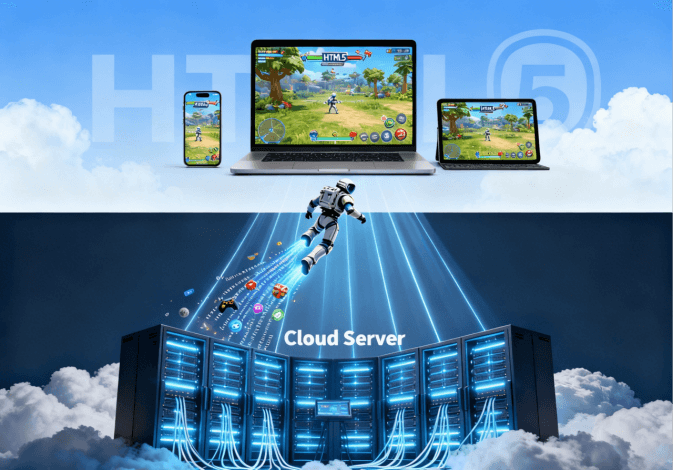


Last Wednesday afternoon, independent developer Emily did an experiment in the library. She opened the HTML5 game she was developing on her laptop and sent the link to her cousin 600 kilometers away. Surprisingly, the cousin can play games in seconds with an old tablet and play two-player battles smoothly — behind which is Microsoft’s latest cloud game technology.
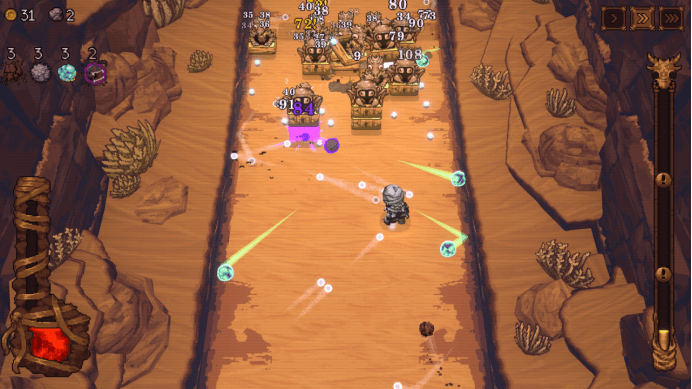
“It’s like installing a super engine on a web game,” Emily described her experience. The puzzle game she developed was originally limited by browser performance. Now, with the help of Microsoft’s cloud rendering technology, it can show exquisite particle effects and complex physical simulations. What excites her most is that players no longer need to worry about the device configuration, and they can get a complete experience by clicking the link.
The breakthrough of this technology is to solve the long-standing performance bottleneck of HTML5 games. Microsoft processes complex graphic operations on the cloud server, and then transmits the processed images to the player’s browser in real time. Daniel, the game developer, gave a vivid analogy: “In the past, we seemed to teach the browser to speak foreign languages, but now the browser only needs to be a good translator.”

For players, the most intuitive feeling is the lowering of the experience threshold. A tester told us that he used a mobile phone five years ago to open a game that originally required a high-end graphics card, and now it can run smoothly. It’s like installing a new engine on an old car. Although the appearance has not changed, the performance is completely different.
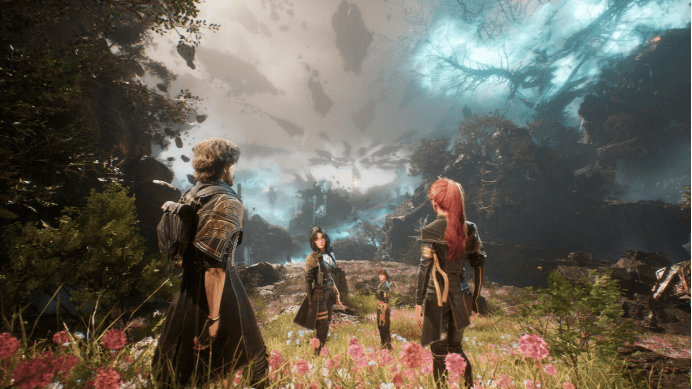
Microsoft’s move is changing the fate of small development teams. Jessica, a developer who just set up the studio, showed the work of her team: a role-playing game that runs completely in the cloud. Without this technology, we may need to invest a lot of money to buy a server. Now you can focus on the creativity itself.
However, the challenges still exist. Network stability has become a new key factor. In areas with weak signal, the game screen will be stuck. Just like watching HD videos online, the speed of the Internet determines the final experience. Microsoft said that they are working with global telecommunications companies to optimize the distribution of edge nodes.
Kevin, an industry observer, believes that this represents the future direction of cloud games. When the game no longer depends on the performance of the terminal device, it means that anyone can play top works. This may change the pattern of the whole game industry.
Your next game experience may be completed in the tab of the browser. When click-and-play becomes a reality, would you be more willing to try new games? Welcome to share your ideas in the comment section.